Ceramics

how to fix a cracked ceramic mug?

how to fix a cracked ceramic mug

A cracked ceramic mug can often be repaired for display, but that doesn’t mean it’s safe for coffee again. Before reaching for glue, I’d check whether the crack is only in the glaze or runs through the ceramic body. At Limba, I’d rather help you preserve a favorite mug as a keepsake than risk it breaking
while you’re holding a hot drink.

Limba Ceramics | Pottery Care

Ceramic Mug Stress Map

Three easily missed areas to inspect before deciding what to do with a damaged ceramic mug.

1 2 3
01

Rim Check The Tissue Test

Gently pass a folded tissue along the dry rim. If it snags, inspect that spot for a sharp chip. Avoid testing the edge with your bare finger.

02

Handle Joint Angled Light

Shine a flashlight across both handle attachment points. Side lighting can reveal fine gaps or cracks that overhead lighting may miss.

03

Foot Ring The Wobble Check

Set the empty, dry mug on a flat countertop. If it rocks, inspect the foot ring underneath for chips or missing ceramic.

Safety note: These checks can reveal damage, but they cannot confirm that a mug is safe for drinking. Never test a damaged mug by filling it with boiling water or lifting it while full.

Is It a Glaze Crack or a Crack Through the Mug?

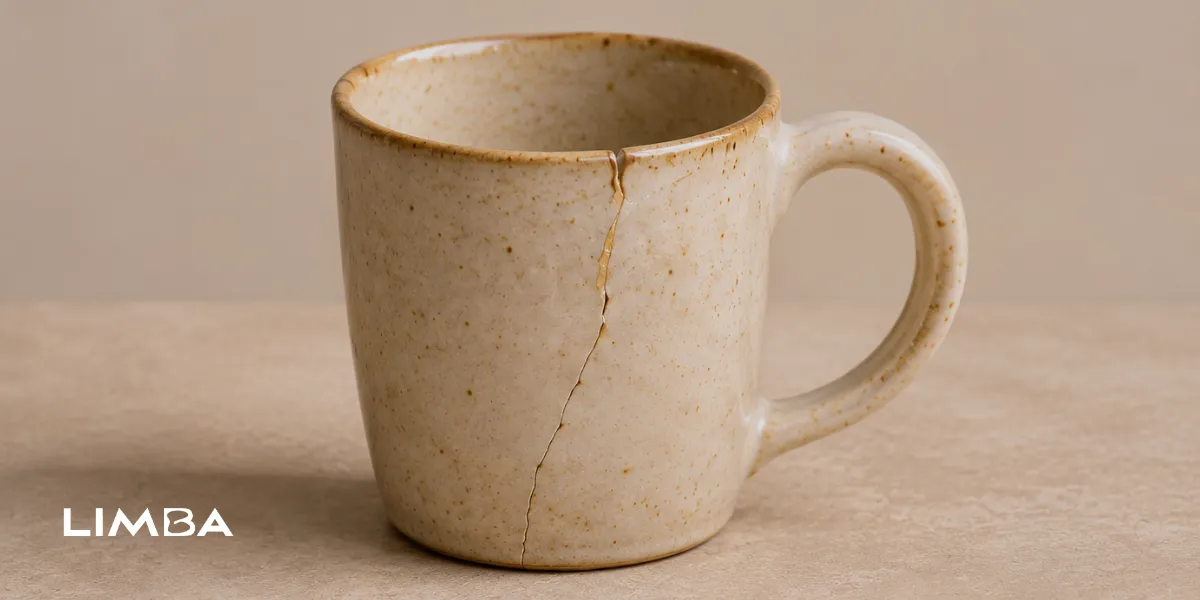
Before using glue, I’d examine the mug under a bright light. Fine, spiderweb-like lines may be glaze crazing, which affects the surface coating rather than necessarily breaking the ceramic body. Check both sides of the mug. A crack running from the rim toward the base, appearing on both surfaces, or causing leakage suggests deeper damage.
My advice: Don’t try to fill every visible line with glue. Glaze crazing and structural cracks need different attention. If you’re unsure how deep the damage goes, keep the mug out of drinking use.

How to Fix a Cracked Ceramic Mug for Decorative Use?

If you’re wondering how to fix a cracked ceramic mug, start by choosing a ceramic compatible adhesive. A two part epoxy can work for decorative repairs, particularly when the broken edges fit together neatly.

Here’s how I’d approach the repair

1. Clean the damaged area. Remove dust and grease, then let the ceramic dry completely.
2. Test the fit first. Position any broken pieces without glue. Don’t force a closed hairline crack wider.
3. Apply the adhesive sparingly. Follow the manufacturer’s mixing instructions and spread a thin, even layer along the accessible broken edges.
4. Align the pieces carefully. Press them together without sliding. Use low-tack tape to prevent movement.
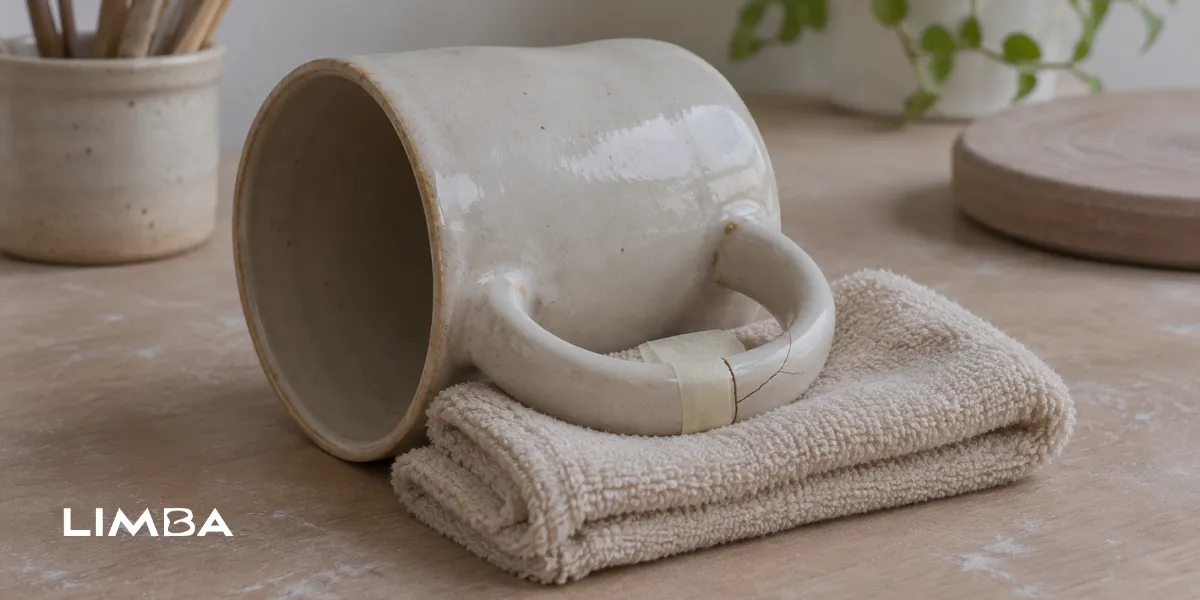
5. Support the mug. For a broken handle, I’d rest the mug on its side with a folded towel supporting the handle. This prevents its weight from pulling the fresh joint apart.
6. Allow complete curing. Follow the adhesive’s full curing time, not just its initial setting time.

One mistake I’d avoid: Adding more glue to compensate for poorly aligned pieces. It creates visible gaps without fixing the underlying fit.

how to fix a cracked ceramic mug

Is a Repaired Ceramic Mug Safe for Coffee or Tea?

A strong adhesive bond doesn’t automatically make a repaired mug safe for drinking. Waterproof, heat-resistant, and food-safe are three different claims. Even a food-contact-approved adhesive may not be suitable for repeated exposure to hot coffee or tea.
Hot liquids can put stress on a repaired joint as the ceramic expands. Cracks may also trap moisture and residue, making thorough cleaning difficult.
I wouldn’t recommend putting a glued mug in the microwave or dishwasher unless the complete repair is specifically approved for those conditions. For a damaged handle or a crack through the body, I’d retire the mug from drinking use entirely.

Repair, Display, or Replace?

Before deciding what to do with a damaged mug, check the crack’s location, whether the ceramic feels loose, and whether the mug leaks. Even a small crack deserves attention if it reaches the drinking rim or handle.

Mug ConditionBest ActionReason
Fine glaze crazingStop and assessThe glaze’s food-contact suitability may be affected
Small exterior chipDecorative repairSharp edges or exposed ceramic may remain
Cracked or broken handleDisplay onlyThe handle could fail when lifting the mug
Deep crack or leaking baseReplace for drinkingThe ceramic body has lost structural integrity

For a sentimental mug, I’d choose a decorative repair rather than risk using it for hot drinks. A repaired cup can still make a useful pencil holder or small planter.

A cracked mug doesn’t always belong in the bin. At our pottery studio, a careful decorative repair can give a sentimental piece a second life. But when the ceramic body or handle is damaged, I’d always choose a new mug for drinking. No favorite cup is worth risking a burn.

FOLLOW LIMBA ON GOOGLE

Want to see more from Limba?

Add Limba Studio as a preferred source on Google for more pottery guides, creative ideas and studio stories.

FAQ

Can you fix a hairline crack in a ceramic mug?

A hairline crack may be repairable for decorative purposes, but first check whether it affects only the glaze or extends into the ceramic body. Don't force the crack open to apply glue. If the damage reaches the body, stop using the mug for drinks.

What is the best glue for repairing a ceramic mug?

A ceramic-compatible two-part epoxy is often suitable for decorative repairs. Choose an adhesive designed for ceramics and follow its curing instructions. A strong bond does not automatically make the mug safe for drinking.

Is a ceramic mug safe to drink from after gluing?

Don't assume it is safe. Even if an adhesive is labeled food-safe, that does not guarantee the entire repaired mug can withstand hot liquids, repeated washing, or daily handling. Keep household-glue repairs out of drinking use.

Can you repair a broken ceramic mug handle?

Yes, a broken handle can often be reattached for display. Align the pieces carefully and support the handle while the adhesive cures. Don't rely on the repaired handle to lift a mug filled with hot coffee or tea.

How can you tell if a ceramic mug crack is serious?

Examine the mug inside and outside under bright light. A crack visible on both surfaces, one extending from the rim toward the base, or any sign of leaking suggests structural damage. If you cannot determine its depth, avoid using the mug for drinking.

ALSO READ:Painting Ceramics Without a Kiln Can You Do It at Home?

Leave a Reply

Your email address will not be published. Required fields are marked *