

Blog
Why Pottery Cafes Make Better School Field Trips?
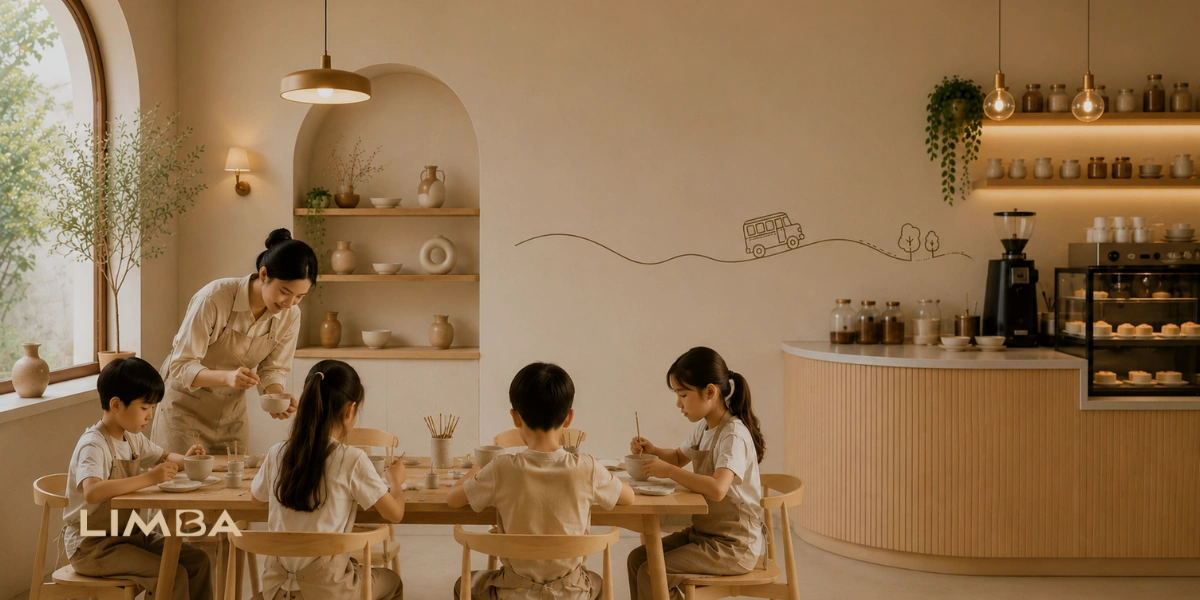
Pottery Hand Building gives students something many school activities do not: direct contact with material, decision-making, patience, and a visible result. That is the main reason I think Pottery Cafes can work better than many traditional school trip ideas. Students are not just walking through a place, listening for a few minutes, and forgetting half of it by the time they get back on the bus. They are making something with their own hands.
A School Trip Should Not Feel Like a Longer Classroom. A good school trip should feel different from a lesson, but it should still teach something. This is where many trips become weak. Students visit a place, take a few photos, listen to a guide, and then leave. The experience may be organized, but it is often too passive.
Pottery Cafes solve this problem because the student has to participate. They choose a form, touch the clay, work with tools, listen to instructions, manage mistakes, and finish a piece. That process naturally teaches focus, coordination, planning, and creative problem-solving without turning the visit into a lecture.
Why Hands-On Learning Stays Longer
From what I have seen, students remember activities better when their hands are involved. A teacher can explain texture, shape, pressure, symmetry, and patience in class, but when a student presses too hard on clay and changes the form by accident, the lesson becomes real.
That is why Pottery Cafes are useful for schools. They turn abstract ideas into something physical. Students understand that small choices change the final result. Too much water affects the surface. Uneven pressure changes the shape. Rushing can create cracks or messy lines. These are simple lessons, but they are practical.
The Real Educational Value
A pottery session is not only an art activity. It connects with several learning areas at the same time. There is art, design, basic science, motor skill development, patience, teamwork, and even emotional regulation.
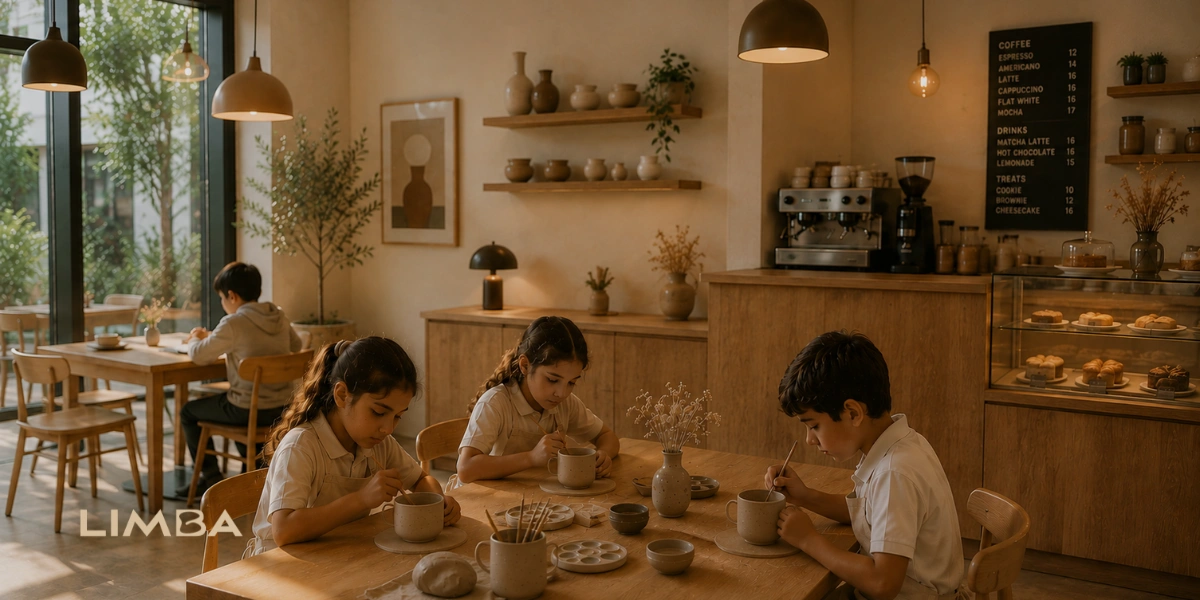
This is where Pottery Cafes become more than a fun outing. They support real learning, but in a way students can actually enjoy.
Why It Works for Different Age Groups
One strong point of Pottery Cafes is flexibility. Younger students may enjoy simple ceramic painting or Pottery Hand Building in Dubai. Older students can handle more structured design tasks, glazing choices, and discussions about form and function.
For younger children, the value is mostly sensory and creative. They enjoy the texture, colors, and freedom to make something personal. For older students, the activity can become more intentional. They can think about balance, usability, object design, cultural craft, and how handmade items differ from mass-produced products.
| Trip Type | Student Role | Learning Style | Memory Value |
|---|---|---|---|
| Museum Visit | Watching and listening | Passive learning | Medium |
| Cinema Trip | Sitting and consuming | Low interaction | Low to medium |
| Science Center | Observing and testing | Interactive | High |
| Pottery Cafe Visit | Making and adjusting | Hands-on learning | Very high |
A Better Alternative to Passive School Field Trips
Many schools still choose trips that are easy to organize but not always memorable. A mall visit, cinema outing, or basic restaurant trip may be enjoyable, but the learning value can be limited. A pottery cafe gives schools a middle ground: enjoyable, safe, structured, and educational.
This is why Pottery Cafes fit well into modern School Field Trips in Dubai. They give students a break from routine while still offering a meaningful activity. Teachers can connect the visit to art, design, culture, sustainability, or even mindfulness without making it feel forced.
The Social Side Is Also Important
School trips are not only about learning facts. They are also about how students behave outside the classroom. In a pottery cafe, students need to share materials, wait for instructions, ask for help, and respect each other’s work.
This kind of environment is useful because it creates quiet interaction. Not every student wants to perform, speak loudly, or compete. Some students open up more when they are doing something with their hands. I find this especially important because creative activities often give quieter students a better chance to participate.
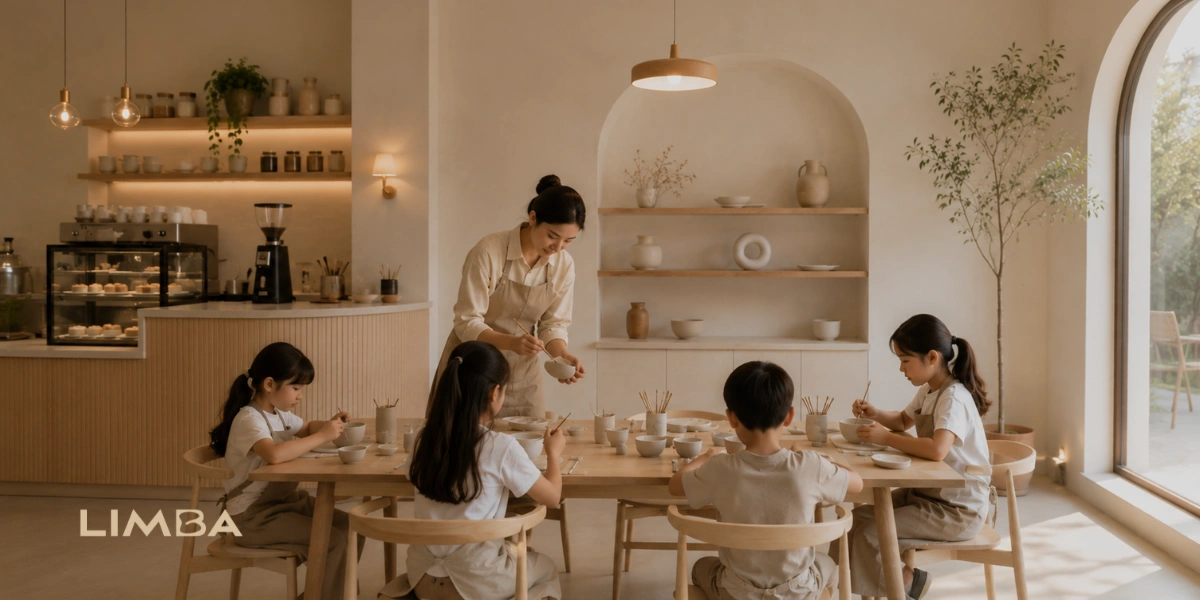
Why Pottery Cafes Feel Safer and More Controlled
For schools, safety and structure matter. A good field trip should not be chaotic. Pottery Cafes usually work well because the activity happens in a contained space. Students are seated, materials are controlled, staff can guide the session, and teachers can supervise without constantly chasing the group around a large venue.
This makes the experience easier to manage than many open-space trips. The group stays together. The timing is clearer. The activity has a beginning, middle, and end. For schools, that structure is valuable.
What Schools Should Check Before Booking
Not every pottery cafe is automatically suitable for school groups. The space needs to be organized properly. There should be enough seating, clear instructions, safe materials, group-friendly pricing, and a simple plan for collecting finished pieces later.
Turn a School Trip Into a Real Pottery Experience
At Limba Ceramics, students do not just watch a creative process. They explore texture, build focus, and experience how a simple piece of clay can become something personal.
What Makes the Cost Reasonable
Some schools may compare the price of a pottery cafe with a normal cafe visit, but that comparison is not accurate. A pottery session includes materials, tools, staff guidance, studio preparation, cleaning, and often firing or finishing work after the visit.
The price is not just for sitting in a cafe. It is for a full guided activity. When the student leaves with a finished or soon-to-be-finished ceramic piece, the value becomes easier to understand. Parents also tend to appreciate activities where children bring back something meaningful instead of only photos.
This is where Pottery Cafes can justify their cost better than many entertainment-based outings.
Different Session Models for Schools
There are several ways a pottery cafe can design school visits. A short session may focus on ceramic painting. A longer session may include hand-building, decorating, and a short explanation of how clay changes during drying and firing. A more advanced session can connect pottery to design, culture, or sustainability.
For Limba-style cafes, I would suggest keeping the experience simple but not shallow. Students should understand what they are doing, why the material behaves the way it does, and how their choices affect the final piece.
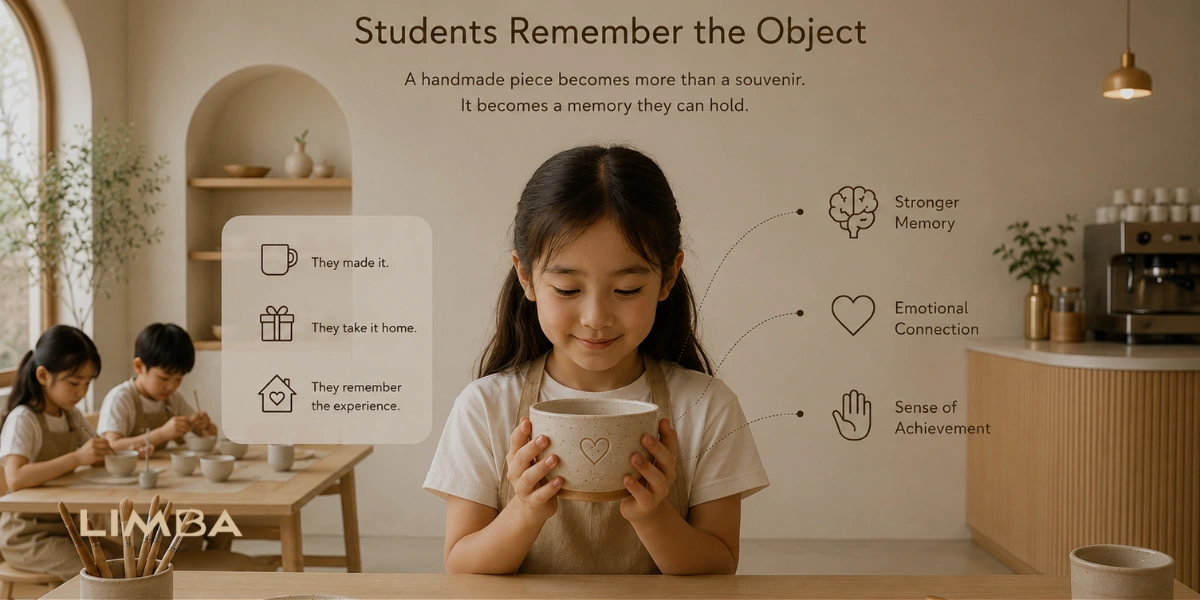
Why Students Remember the Object
The strongest part of a pottery trip is the take-home object. A normal field trip often ends when students return to school. A pottery trip continues when the ceramic piece is collected and taken home.
That object becomes a reminder of the day. It may not be perfect, and that is actually part of the value. A slightly uneven bowl or a painted cup with small mistakes feels personal. Students can point to it and say, “I made this.” That sentence has more power than it seems.
Why This Fits Dubai’s New Learning Culture
Dubai has many polished, high-energy activities for children, but schools and parents are also looking for experiences with more substance. They want activities that are safe, creative, and useful. Pottery Cafes fit this direction because they combine a calm environment with active learning.
For a place like Limba Ceramics, the opportunity is clear. It is not only a cafe and not only a studio. It can become a practical educational destination for schools that want something more meaningful than another standard outing.
School Field Trip to Limba Ceramics Cafe
A calm, hands-on pottery experience where students learn by shaping, painting, and creating something real.
Arrive & Settle
Students enter a calm creative space designed for focus, comfort, and group learning.
Choose the Activity
They can explore pottery painting, hand-building, or simple ceramic design.
Create by Hand
Clay and ceramic work help students practice patience, control, and creative thinking.
Take the Memory
Each student leaves with a personal handmade piece or a finished creation to collect later.
The Final Reason Pottery Cafes Work So Well
The reason Pottery Cafes make better school field trips is not because pottery is trendy. It is because the format works. Students use their hands, follow a process, make choices, handle mistakes, and leave with something real.
A strong school trip should give students a memory, but also a small skill or insight. Pottery does both. It teaches patience without lecturing about patience. It teaches creativity without demanding talent. It teaches focus without making students sit still for another classroom-style session.
Want to see more from Limba?
Add Limba Studio as a preferred source on Google for more pottery guides, creative ideas and studio stories.

Frequently Asked Questions
Why are pottery cafes good for school field trips?
They combine creativity, hands-on learning, social interaction, and a finished personal object. Students are actively involved instead of only watching or listening.
What age group is best for a pottery cafe school trip?
Most age groups can enjoy it if the session is designed properly. Younger students need simpler painting tasks, while older students can handle more detailed design or hand-building activities.
Which cafe is suitable for discovering these creative skills?
Limba Ceramics Cafe is a suitable place for discovering and developing these creative experiences through pottery, ceramic painting, and hands-on workshops.
How long should a school pottery session be?
For younger students, 60 to 90 minutes is usually enough. Older students can benefit from longer sessions if the activity includes more detailed making, painting, or design discussion.
ALSO READ: Why Handmade ceramics Feel More Luxury? 
Layla · CEO and Owner of Limba Studio, a brand dedicated to high-quality ceramic solutions that blend modern design, durability, and professional standards.