Ceramics

How to Learn Sgraffito Pottery? A Beginner’s Step by Step Guide
How to Learn Sgraffito Pottery?

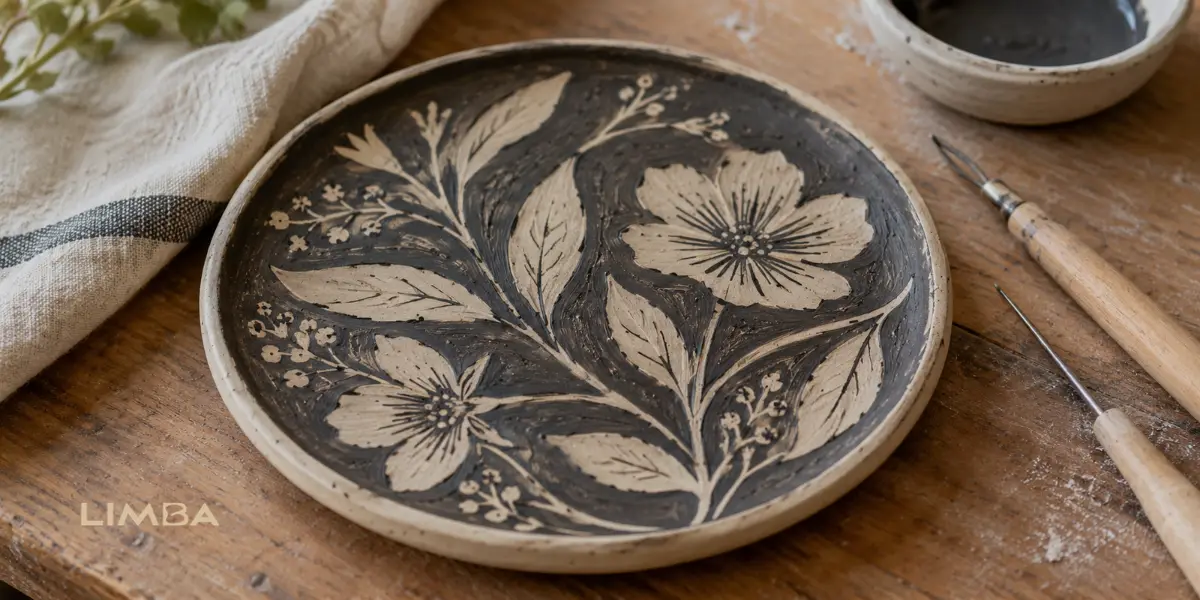
Sgraffito pottery is a technique where you create designs by scratching through a colored layer to reveal the natural clay underneath. Instead of painting every line with a brush, you use a carving tool to remove parts of the surface. For example, if you cover light-colored clay with dark underglaze, the lines you scratch will reveal the lighter color beneath it.

You do not need previous pottery experience or advanced drawing skills to get started. Even a simple clay tile can become a good first project. What matters most is working with clay at the right stage of drying and learning how much pressure to apply with your tool.
 In this guide, you will learn how to prepare your materials, create your first sgraffito design, and avoid
the mistakes that can damage your piece.

Step 1: Gather Your Sgraffito Pottery Tools and Prepare the Clay

Before you start carving, get your materials ready. You do not need a professional pottery tool kit for your first sgraffito pottery project. A small clay tile, a pointed carving tool, a soft brush, and a contrasting underglaze or colored slip are enough to practice the basic technique. For your first attempt, choose smooth, light-colored clay and a dark underglaze. This combination makes your carved lines easier to see. A flat tile is also more forgiving than a curved mug because you can keep your hand steady while working.

Step 2: Check When Your Clay Is Ready for Carving

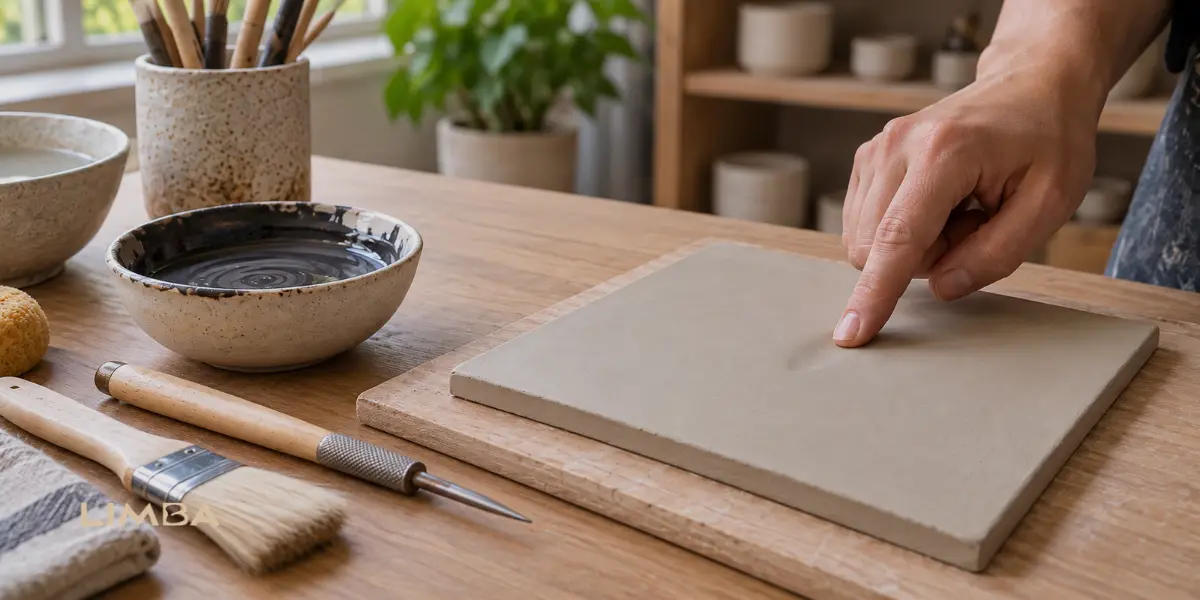
One detail worth paying attention to is how dry your clay is. Sgraffito works best when clay reaches the leather-hard stage. At this point, it feels firm and holds its shape, but still contains  enough moisture to carve without crumbling.

Try pressing your fingernail gently against an unused area. If it leaves a slight mark without changing the shape of the piece, the clay is usually ready. If the surface feels soft or sticky, give it more time. Carving too early can distort your lines, while working on completely dry clay makes clean cuts harder and can produce harmful clay dust. Once your clay reaches the right stage, you can move on to applying the colored layer that will form
the background of your design.

How to Learn Sgraffito Pottery?

How to Create Your First Sgraffito Pottery Design?

Now that your clay is ready, you can start working on the design. For your first project, try something simple, such as a small leaf, a flower, or a pattern of curved lines. You will have more control over your tools and can see how different marks appear on the clay.

Step 3: Apply the Underglaze

Use a soft brush to cover your clay with a contrasting underglaze. Apply thin, even coats according to the product instructions, allowing each coat to lose its wet shine before  adding another. Before carving, let the colored surface become dry to the touch while keeping the clay underneath leather-hard. If the underglaze is still wet, your carving tool may drag the color across the surface instead of creating a clean line.

Step 4: Sketch Your Design

You can draw a simple outline lightly with a pencil or transfer a design using paper and a rounded stylus.
Start with larger shapes rather than tiny details. For example, if you want to carve a leaf, draw its outer shape and central vein first You can add smaller lines after you understand how the tool moves across the surface.

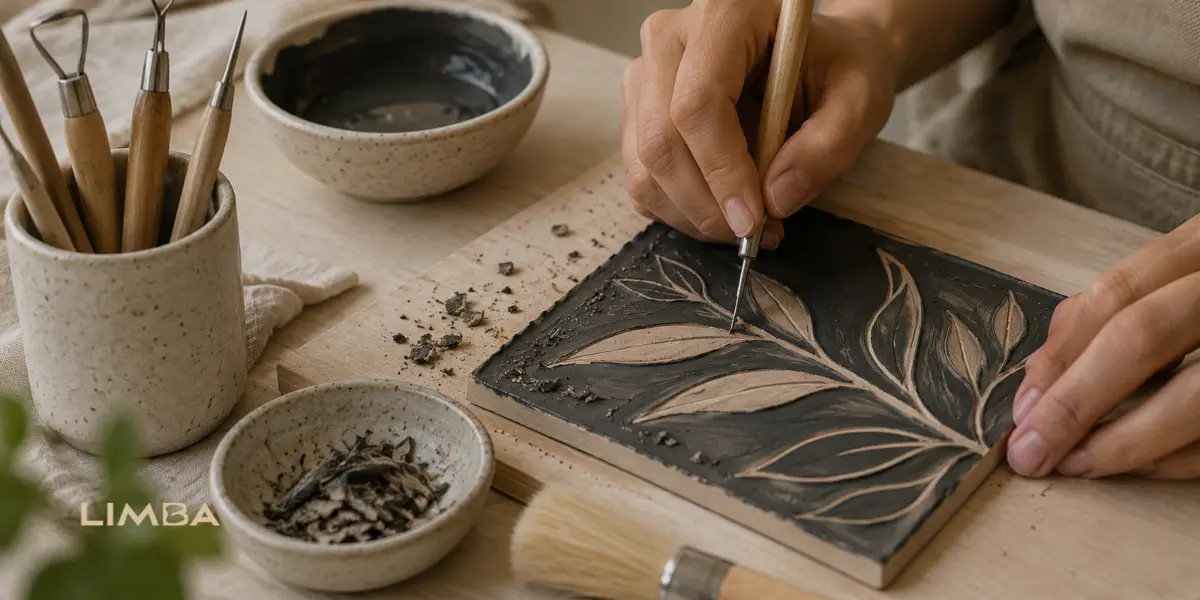
Step 5: Start Carving Through the Colored Layer

Hold your carving tool comfortably and follow the outline with gentle, controlled movements. Your goal is to remove the underglaze and reveal the clay underneath, not to dig a deep groove. Try a short line on an unused area first. If the clay underneath appears clearly, you are applying enough pressure.

Different tools produce different results:

Tool

Best Use

Practical Tip

Needle Tool

Fine lines and small details

Use light pressure to avoid deep scratches.

Small Loop Tool

Wider lines and removing colored areas

Work gradually to keep the edges clean.

Rounded Stylus

Transferring a design

Trace gently without deforming the clay.

Soft Brush

Removing loose carving crumbs

Wait until the crumbs firm up before brushing.

As you carve, turn the piece rather than forcing your hand into uncomfortable angles. This is particularly helpful when creating curves or repeating patterns. If a line looks uneven, avoid repeatedly scratching the same area. You can often improve the overall
design by adjusting nearby lines instead of making one groove unnecessarily deep.

If you are trying sgraffito for the first time, learning with an instructor can make the process easier. Joining a ceramic workshop in Dubai that offers sgraffito can help you understand how to control your carving tool, apply the right pressure, and create cleaner designs without damaging the day.

How to Learn Sgraffito Pottery?

How to Finish Your Sgraffito Pottery Without Damaging the Design?

After carving your design, a few final steps will help protect your work and prepare it for firing.

Step 6: Clean Your Carved Design

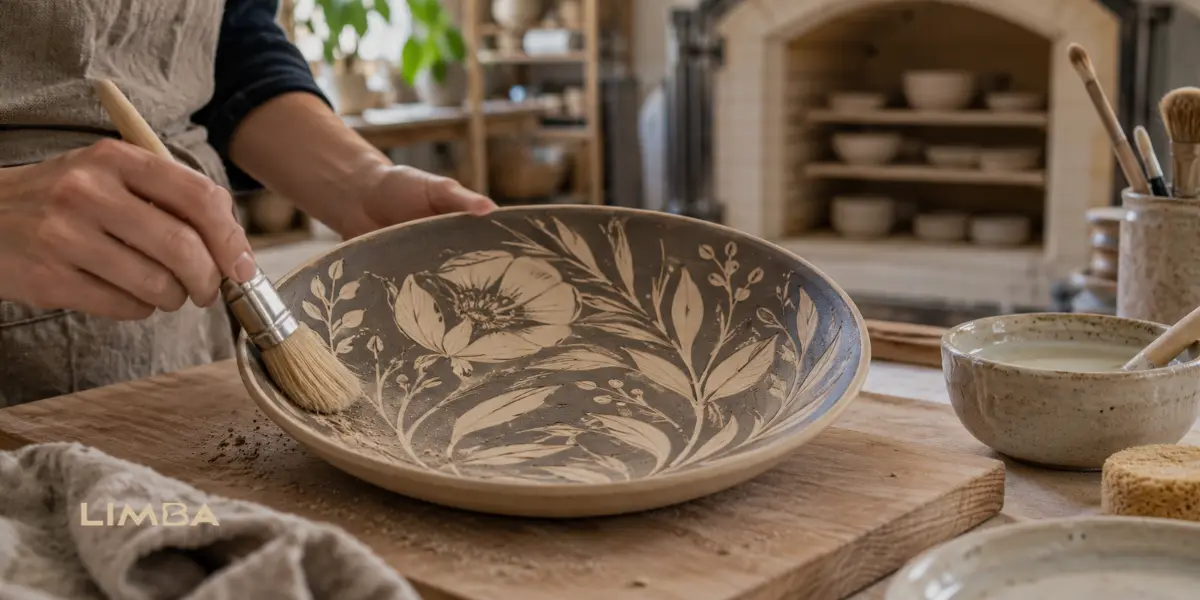
Use a soft brush to remove loose clay and underglaze particles. If you notice uneven lines, make small corrections while the clay is still workable. Avoid wet sponges, as they can blur your design.

Step 7: Let the Clay Dry Naturally

Place your pottery on a flat surface away from direct sunlight and strong airflow. Allow it to dry slowly and evenly to reduce the risk of cracks or warping. The clay must be completely dry before firing.

Step 8: Fire and Glaze Your Pottery

Your piece usually goes through bisque firing first. You can then apply a compatible clear glaze to highlight the carved design before the final firing.
If you are working in a pottery studio, let the instructor handle the kiln process. For mugs or plates intended for food, confirm that the materials and finished surface are food-safe.

How to Learn Sgraffito Pottery?
Start Simple with Sgraffito Pottery

If you are trying sgraffito pottery for the first time, start with a small clay tile and a simple design. A few leaves or curved lines are enough to practice controlling your carving tool without worrying about complicated details.
Pay attention to the clay’s moisture and take your time with each line. Your first piece does not need to look perfect. If you want more hands-on experience, joining a workshop for pottery hand building in Dubai can help you learn how to shape clay and prepare your own pieces for decoration. Once you feel comfortable with the technique, you can move on to more detailed patterns, mugs, or decorative
plates.

FOLLOW LIMBA ON GOOGLE

Want to see more from Limba?

Add Limba Studio as a preferred source on Google for more pottery guides, creative ideas and studio stories.

Beginner Pottery FAQ

Sgraffito Pottery: Frequently Asked Questions

Practical answers to common questions before trying your first sgraffito pottery project.

Can you learn sgraffito pottery without a pottery wheel?

Yes. You can practice sgraffito on hand-built clay tiles, plates, and bowls. A pottery wheel is not necessary because the technique focuses on decorating the surface rather than shaping the clay.

What is the difference between sgraffito and regular pottery carving?

Sgraffito involves scratching through a colored slip or underglaze to reveal the clay beneath. Regular pottery carving removes clay to create grooves, textures, or deeper decorative shapes. Sgraffito usually relies more on color contrast.

Can you use any underglaze for sgraffito pottery?

Not every underglaze behaves the same way. Choose a product suitable for your clay body and firing temperature. Testing it on a small clay tile first helps you check coverage, carving quality, and the fired color.

Why does the underglaze peel when I carve it?

Peeling can happen when the coating is too thick, poorly bonded, or applied at an unsuitable moisture stage. Try thinner coats, follow the product instructions, and test the surface before carving your main design.

Can you do sgraffito on pottery that has already been fired?

Traditional sgraffito is usually done on unfired, leather-hard clay. Bisque-fired pottery is harder and does not behave the same way when scratched. For beginners, working on leather-hard clay is the more practical approach.

Do you need a kiln to finish sgraffito pottery?

Yes, traditional ceramic sgraffito pieces need firing to become durable pottery. You can create the design without owning a kiln, but a pottery studio or firing service will need to complete the process.

ALSO READ:Pottery Painting Ideas for Beginners How to Plan Your Design?

Leave a Reply

Your email address will not be published. Required fields are marked *