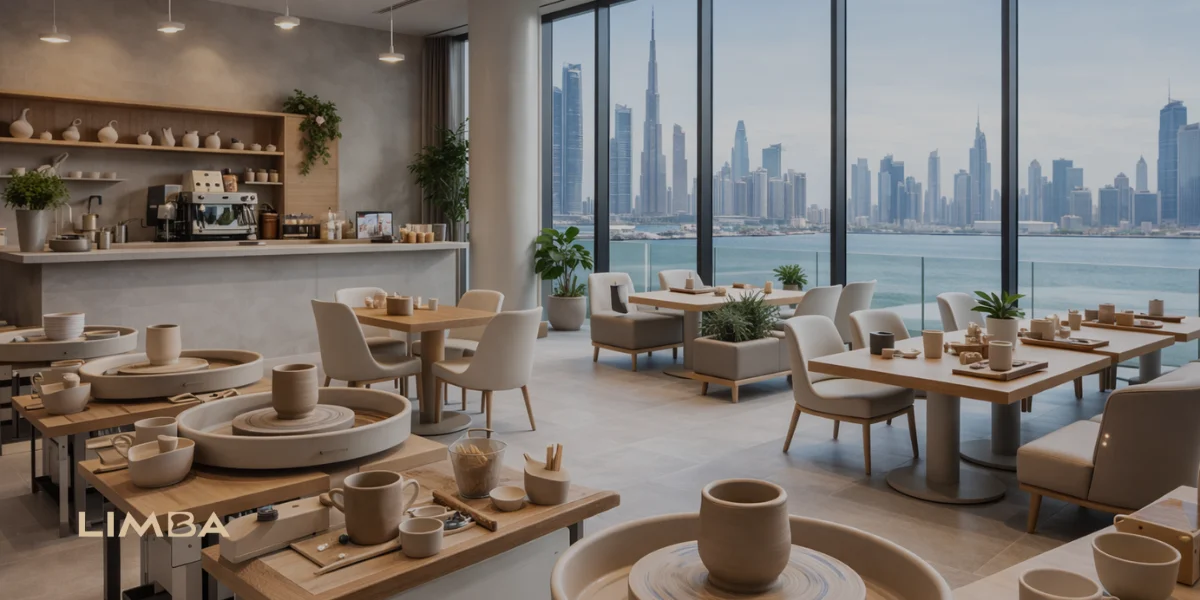
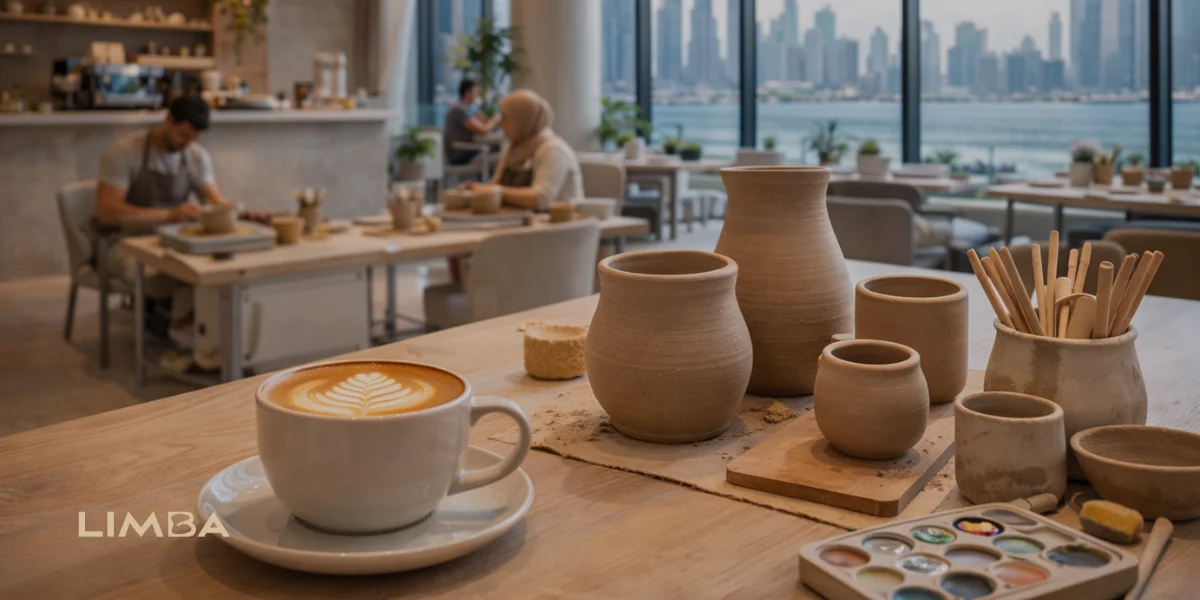
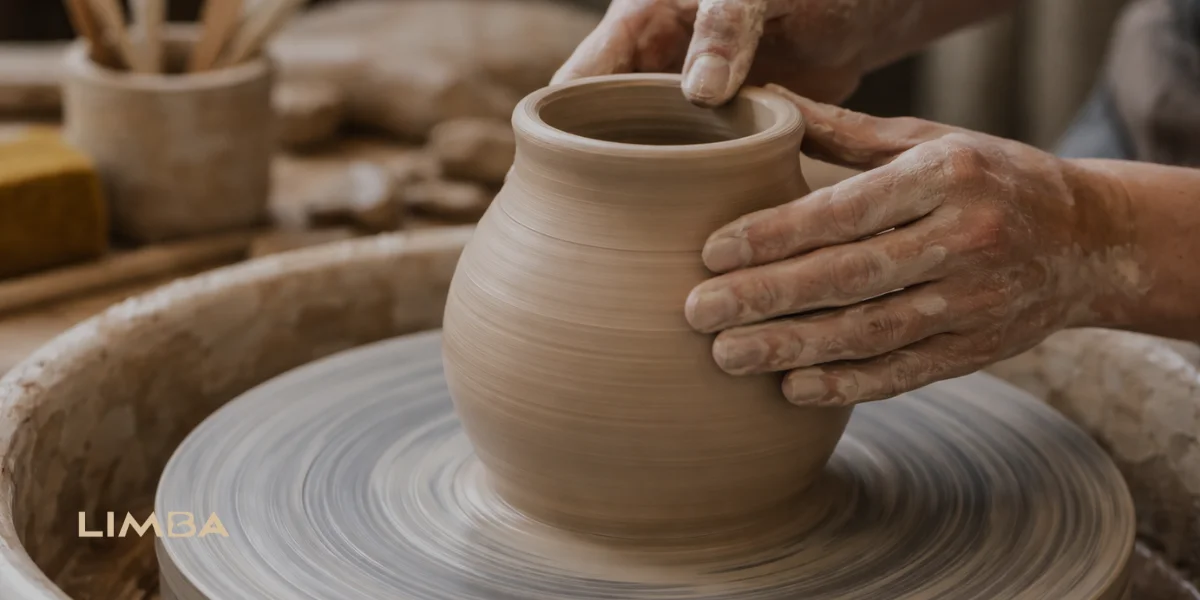
A pottery cafe is a place where coffee, ceramics, and guided creativity come together in one relaxed setting. Instead of only sitting for a drink, you can paint a ceramic piece, try clay, join a short session, or spend time in a creative studio cafe. If you are wondering what a pottery cafe is in Dubai, Limba gives you a simple example: a calm pottery and ceramic cafe where guests can paint, create, drink coffee, and plan creative experiences with friends, dates, or groups.
The Real Meaning of a Pottery Cafe
What Is a Pottery Cafe? At its core, it is a hybrid space where a café environment is intentionally combined with guided or semi guided pottery activities. You are not renting a full studio, and you are not just drinking coffee. You are paying for structured access to clay, tools, firing services, and an atmosphere designed for short-term creative engagement.
Unlike traditional ceramic studios, a pottery café is built for people with little to no experience. Sessions are time-bound, outcomes are simplified, and success is defined as participation rather than mastery. That distinction matters more than people realize when they walk in expecting to create museum-level ceramics.
At Limba, this experience happens inside a ceramic cafe in Dubai where guests can paint, create, drink coffee and enjoy a guided creative session.
Info:
A pottery café is not an art school, and it is not trying to be one. Its value lies in accessibility, not technical depth.
Why Pottery Cafes Exist in the First Place
To understand what a Pottery Cafe is, you have to understand the problem it solves. Modern urban life is overstimulated, screen-heavy, and socially fragmented. Pottery cafés offer controlled slowness. Your hands are busy, your phone is irrelevant, and conversation happens naturally without pressure.
This is also why concepts like Pottery Dates in Dubai exist and work so well. You are not forced to talk nonstop, and silence never feels awkward because the clay is doing half the work for you.
Tip:
If a pottery café feels rushed or loud, it has failed its core purpose, no matter how good the coffee is.
How a Pottery Cafe Actually Works
Most pottery cafés operate on a reservation-based system. You book a session length, usually between 60 to 120 minutes. The price typically includes clay, basic tools, instructor guidance, glazing, and kiln firing.
What many people misunderstand is the timeline. You do not take your piece home the same day. Firing alone takes days, sometimes weeks, depending on kiln schedules.
If you prefer a simpler first visit, you can start by painting your own pottery in Dubai, where you choose a ready ceramic piece, paint it, and let the studio handle glazing and firing.
Here is a realistic breakdown of the process:
| Stage | What Happens | Time Required |
| Arrival & Orientation | Tool explanation and safety basics | 10–15 minutes |
| Creating | Hand-building or wheel throwing | 45–90 minutes |
| Drying | Clay air-dries before firing | 3–7 days |
| Firing & Glazing | Kiln firing and finishing | 1–3 weeks |
| Pickup | Finished ceramic item | Scheduled |
Info:
If a place promises same-day finished ceramics, you are not dealing with real fired pottery.
Not All Pottery Cafes Are the Same
When people ask What Is a Pottery Cafe?, they often imagine a wheel. In reality, many cafés focus on hand-building because it is faster, cleaner, and easier to manage in a public space.
Wheel throwing is more expensive and more technically demanding. It also has a higher failure rate for beginners. Some cafés offer both, but charge separately.
For a beginner-friendly start, compare hand building pottery in Dubai with a pottery wheel class in Dubai before booking your session.
Tip:
If it’s your first time, hand-building will give you better results and less frustration than the wheel.
What Affects the Cost of a Pottery Cafe Session?
The cost of a pottery cafe session usually depends on the activity type, clay or ceramic piece, instructor support, glazing, kiln firing and how private or guided the session is. Instead of guessing from general online prices, it is better to check the current session details before booking.
On average, prices look like this:
| Experience Type | Average Price Range |
| Hand-Building Session | $35 – $60 |
| Wheel Throwing Session | $55 – $95 |
| Private Session | $120 – $250 |
| Take-Home Glaze Upgrade | $10 – $25 |
Info:
Cheap pottery cafés often cut corners on firing quality, which directly affects durability.
Who Pottery Cafes Are Perfect For
What Is a Pottery Cafe? It is perfect for people who value experience over outcome. If you want a flawless mug, buy one. If you want to understand how objects are made, this is your place.
They work exceptionally well for beginners, couples, small groups, and people looking for intentional downtime. They are not ideal for professional ceramicists or anyone expecting full creative control.
Pottery cafes also work well for creative dates, birthdays and small group experiences because the activity gives people something natural to do together.
Tip:
If a café limits design options heavily, it is optimizing for volume, not creativity.
Emotional Experience Without the Overhype
There is something grounding about clay, but it is not mystical. The satisfaction comes from physical engagement and visible progress, not from some abstract emotional promise.
I avoid places that oversell transformation. Pottery cafés work because they are honest about limitations and generous with guidance.
Info:
Emotional impact is a byproduct of good structure, not exaggerated storytelling.
How to Choose the Right Pottery Cafe
Look for transparency in pricing, clear timelines for pickup, visible kilns, and instructors who explain rather than perform. Reviews should mention consistency, not just vibes. What Is a Pottery Cafe? It is only as good as its systems, not its Instagram feed.
FOLLOW LIMBA ON GOOGLE
Want to see more from Limba?
Add Limba Studio as a preferred source on Google for more
pottery guides, creative ideas and studio stories.
Frequently Asked Questions