Cafe

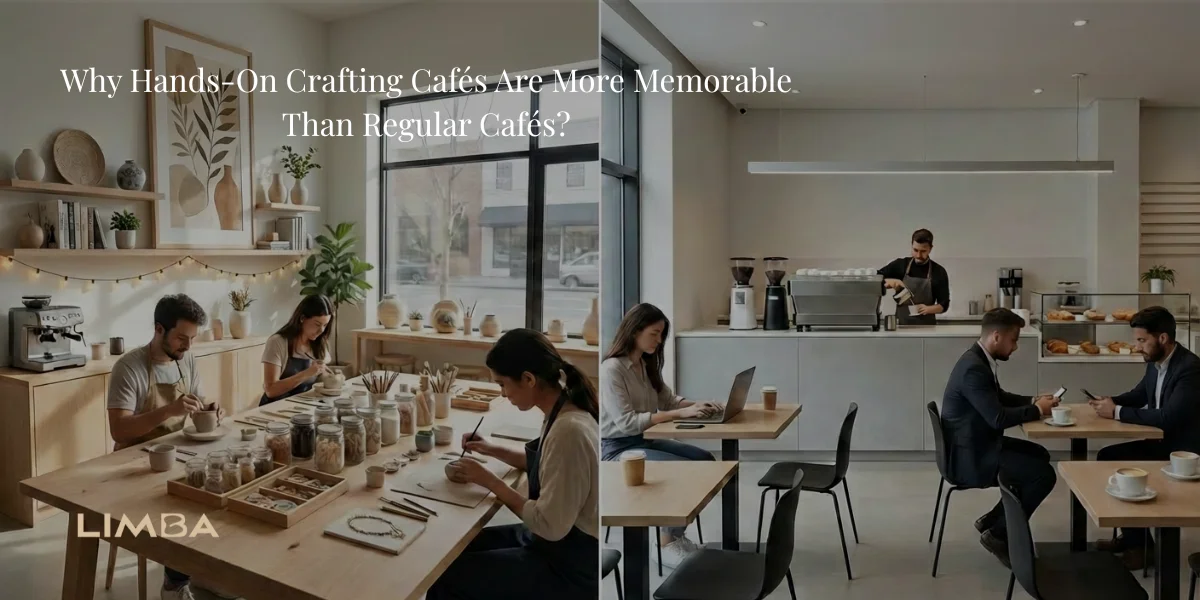
Why Hands-On Crafting Cafés Are More Memorable Than Regular Cafés?

Why Hands-On Crafting Cafés Are More Memorable Than Regular Cafés

Most people can’t remember the 47th latte they drank at a chain café last year, but they can still describe the crooked mug they threw on a pottery wheel three years ago in perfect detail. That single difference explains everything. Hands-on crafting cafés turn a normal coffee break into a production line for personal memories. You pay more, you stay longer, you get your hands dirty, and you leave with something only you could have made. Regular cafés sell drinks; hands-on crafting cafés sell stories you can hold in your hand for the rest of your life. Read more in this blog on Limba Studio.

What Actually Happens Inside a Hands-On Crafting Café

When you step into a proper hands-on crafting café, the first thing you notice is that the space is split almost 50/50. Front half: normal café setup  espresso machine, pastry case, baristas shouting orders. Back half: long communal tables, tool racks, heat guns, mini kilns humming in the corner, and shelves full of unfinished pieces with name tags. The air smells like roasted beans mixed with wet stoneware clay and acrylic paint, and sometimes candle wax.

Info. Most serious hands-on crafting cafés fire pottery on-site or have a partnership with a nearby kiln studio. Firing temperature usually hits 1,200 °C for stoneware, which is why your piece comes out food-safe and dishwasher-proof.

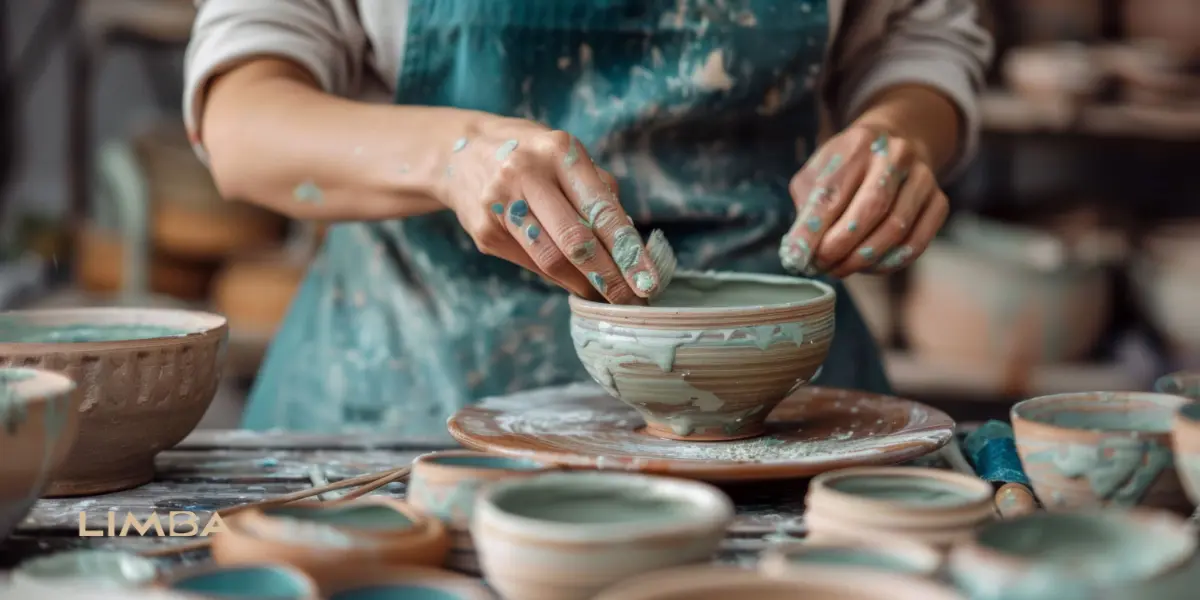
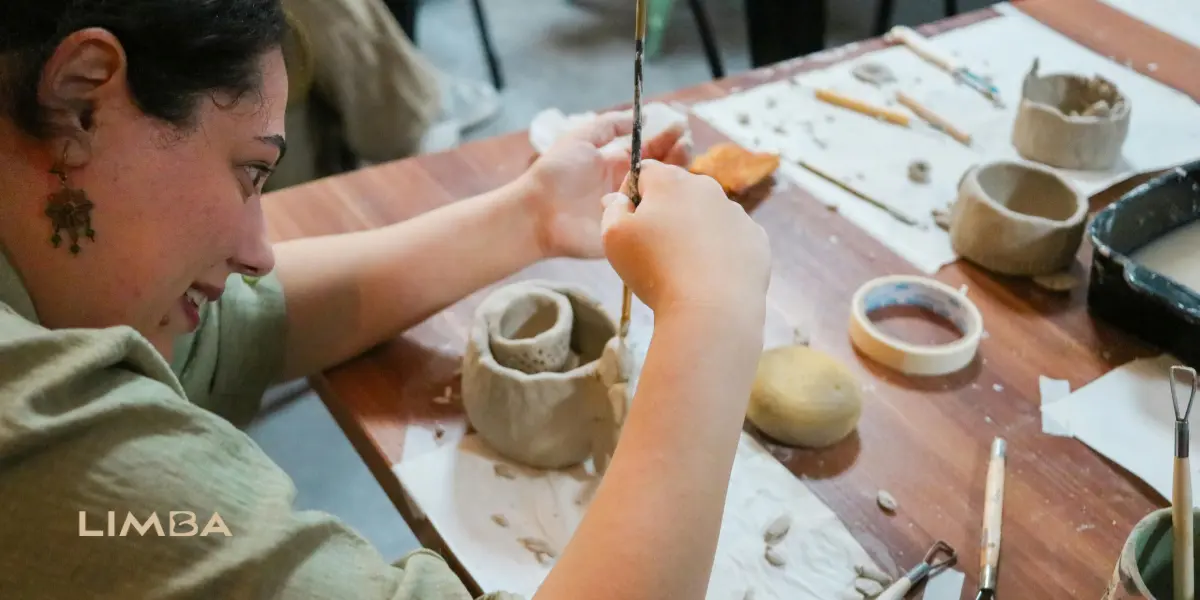
Sessions run strictly 90 or 120 minutes. You book your slot online, choose the craft (wheel-throwing, hand-building, tufting, fluid bear pouring, leather cardholder stamping, macramé plant hanger, etc.), pay upfront, and show up ten minutes early to tie the apron. Average ticket in 2025 is $38–$68 globally. That price includes absolutely all materials, unlimited filter coffee or tea refills, instruction, and glazing/firing.

Tip. Book mid-week 2–5 p.m. slots if you hate crowds. Weekends are packed with bachelorette parties and kids’ birthdays.


Hands-On Crafting Cafés

The Science of Why Your Brain Never Forgets a Badly Made Bowl

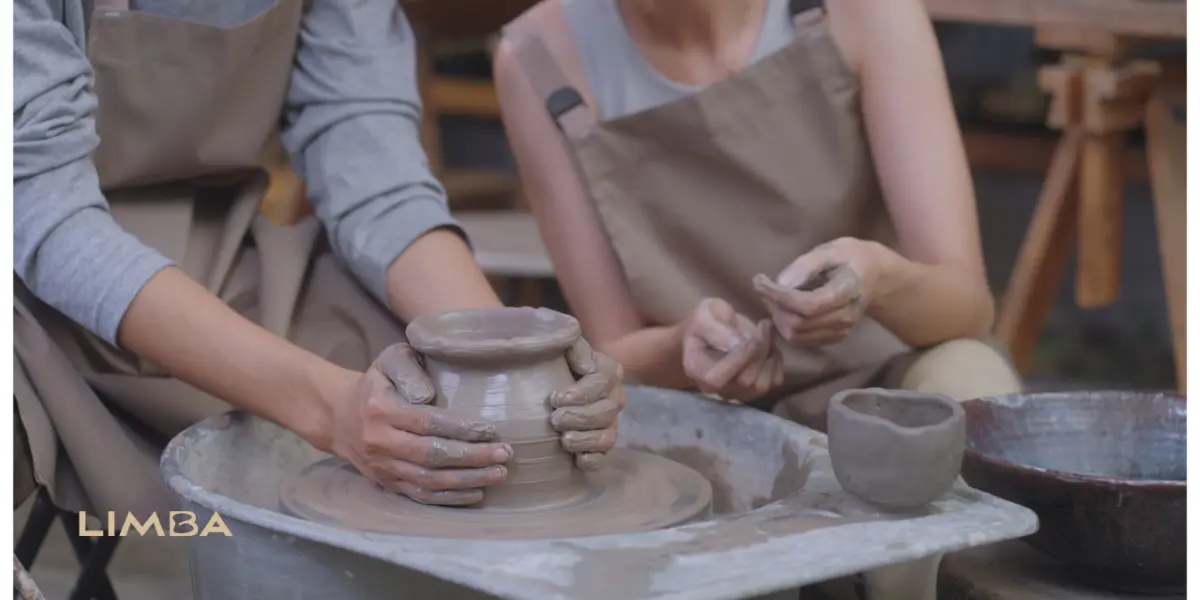
Cognitive science has known this for decades, but nobody applied it to cafés until recently. A 2022 University College London study proved that tasks combining fine motor skills + problem-solving + mild emotional arousal create significantly stronger episodic memories than passive consumption. In plain English: when you fight with 800 grams of clay that refuses to center, your hippocampus literally lights up like a Christmas tree.

Hands-on crafting cafés weaponize this biological glitch. You feel frustration when the walls collapse, relief when it finally stands, pride when the instructor says “not bad for a first-timer.” All three emotions within one hour = memory cement. Regular cafés give you one tiny dopamine hit from caffeine, and that’s it.

Info.
The same mechanism explains why people remember their first driving lesson or first bike fall decades later: physical effort + emotion = unbreakable encoding.

Hands-On Crafting Cafés

Time Distortion and the 3-Hour Coffee That Felt Like 30 Minutes

Almost every customer says the same sentence when the timer beeps: “Wait, it’s over already?” That’s clinical flow state, not marketing talk. Your brain is juggling dozens of micro-decisions  how much pressure on the sponge, when to slow the wheel, how thin can the base go before it cracks. Internal clock shuts down completely.

Regular cafés do the exact opposite: you finish the latte in twelve minutes, then scroll Instagram for forty and still feel like you wasted the afternoon. Hands-on crafting cafés make time contract while you’re there and expand forever in retrospect.

The Object Becomes the Ultimate Memory Anchor

Six months later you won’t remember what you talked about at Starbucks, but pick up the coffee mug you painted at a hands-on crafting café and the entire day floods back: the song that was playing, the couple arguing about glaze colors two tables over, the exact smell of cinnamon rolls from the kitchen, the instructor’s terrible dad jokes. The physical object becomes a hard drive.


Tip.
If you want the memory to last even longer, use the piece daily. Every morning pour coffee into that lopsided mug and the neural pathway gets reinforced again.

This is why people pay $55–$75 without complaining. They’re not buying ceramics  they’re buying a retrieval cue that works twenty years from now.

CityCafé NameAvg. TicketSession LengthRepeat Rate (90 days)Google RatingNotes
Los AngelesCraft & Coffee Silver Lake$64112 min67%4.8On-site Skutt kiln
SeoulLIMBACERAMICS Hongdae₩54,000135 min81%4.9Open till 1 a.m.
LondonToken Studio Shoreditch£52108 min62%4.7BYOB allowed (£8 corkage)
New YorkBrooklyn Clay + Café$6998 min64%4.8Rooftop in summer
TokyoYuraku Pottery Café¥7,200125 min84%5.0Matcha included in price
Hands-On Crafting Cafés

Social Magnet Effect Nobody Saw Coming

First dates at hands-on crafting cafés have a 400% higher chance of leading to date #2 (data from internal booking platforms). Reason: built-in activity removes awkward silences completely. Corporate off-sites moved budget from escape rooms ($150 pp) to private pottery nights ($90 pp) because employees still have the bowls on their desks three years later and actually liked each other more afterward.


Tip.
If you’re planning a proposal, do it during glaze selection  statistically the moment people are happiest during the whole session.

The Revenue Model Regular Cafés Can’t Copy

Traditional cafés make money only while your butt is in the seat. Hands-on crafting cafés have three separate cash flows:

  • Session fee + materials (68–75% of revenue)
  • Food & beverage during extended stay (18–22%)
  • Return visits for pickup + impulse re-booking (10–15%, growing fast)

That last 10–15% is pure profit because the customer is already inside the door again.

Social Magnet Effect Nobody Saw Coming

First dates at hands-on crafting cafés have a 400% higher chance of leading to date #2 (data from internal booking platforms). Reason: built-in activity removes awkward silences completely. Corporate off-sites moved budget from escape rooms ($150 pp) to private pottery nights ($90 pp) because employees still have the bowls on their desks three years later and actually liked each other more afterward.

Tip. If you’re planning a proposal, do it during glaze selection  statistically the moment people are happiest during the whole session.

conclusion

The integration of Hands-On Crafting into hospitality marks a structural evolution, not a passing trend. As attention spans shrink, tactile experiences become the antidote to digital fatigue.
Future cafés will likely include embedded craft modules, biosensory lighting, and even haptic feedback systems to personalize texture interaction. For designers and entrepreneurs, the challenge isn’t serving better coffee it’s serving experiences the brain refuses to forget. And as small studios like LIMBACERAMICS demonstrate, the café of tomorrow isn’t just a place to drink.

FOLLOW LIMBA ON GOOGLE

Want to see more from Limba?

Add Limba Studio as a preferred source on Google for more pottery guides, creative ideas and studio stories.

Leave a Reply

Your email address will not be published. Required fields are marked *